Most people who set out to buy on Lake Lanier picture one thing: a house, a dock, a boat, done. Then they start touring and realize “lake home” covers a much wider range than they expected, and that the water itself comes with rules the seller does not control. The gap between two listings that both say “lake” in the description can be enormous, in price and in what you are actually allowed to do once you own it.
Most of Lanier’s shoreline sits in Forsyth and Hall counties, which is where the team spends a lot of its lake time. Here is the rundown we give buyers before they ever get in the car, so the tours make sense and nobody falls for a listing that does not do what they thought it did.
The Three Kinds of “Lake Home” on Lanier
The first thing to sort out is which category a listing actually falls into, because “lake house” gets used loosely and the differences run deep. Sort this out early and the rest of the search gets a lot clearer.
Lakefront With a Dock
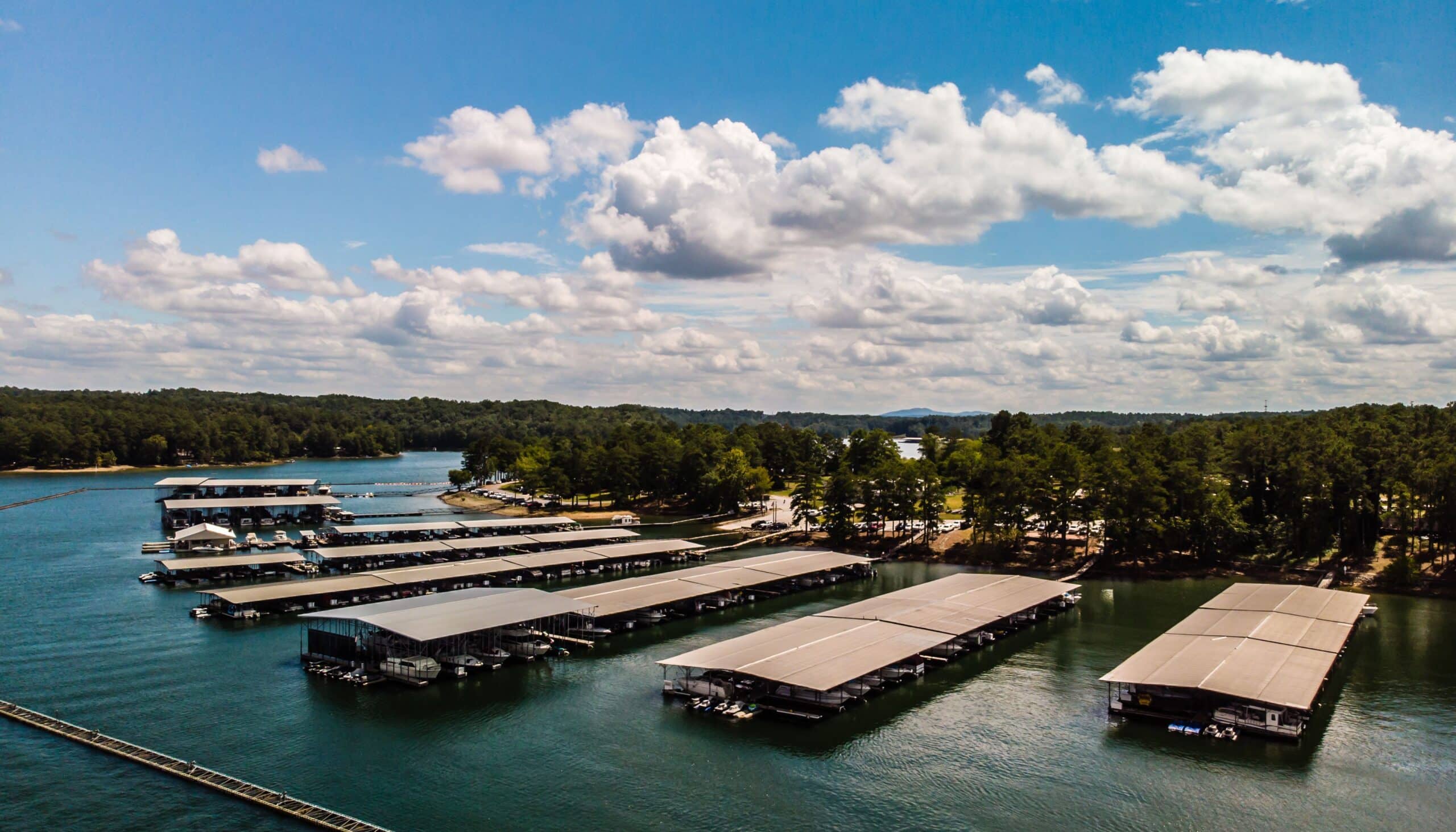
This is what most buyers mean when they say lake home: the property sits on the water, and there is a dock already in place. The dock is usually the single most valuable feature of the whole purchase, so it deserves its own attention rather than being treated as a bonus that comes with the house. Confirm early that the dock conveys with the sale and that it is properly permitted, because those two things are not automatic and they matter more than the finish level of the kitchen. This is the top of the price range, and for good reason. You walk out your back door to your own water.
Lake Access and Lake Area Homes
Here is where listing language earns a close read. “Lake access” often does not mean your own shoreline. It can mean a community boat ramp, a shared slip, or a neighborhood park on the water, which is a real amenity but a very different thing from a private dock. “Lake area” can be looser still, sometimes it just means the home is near the lake with no water rights at all. The price gap between these and true lakefront is significant, which is exactly why the wording gets stretched. If a listing is vague, ask the plain question: does this specific home give me the right to put a boat on the water, and where. Get the answer in writing before you get attached.
Why the Army Corps of Engineers Matters More Than the Seller
Lake Lanier is a federally managed reservoir. The U.S. Army Corps of Engineers oversees the lake and its shoreline, which means docks and the land right at the water are governed by Corps rules rather than being entirely the homeowner’s to do with as they please. Buyers who come from a private-lake background, or from no lake at all, tend to be caught off guard by this. You are not just buying a house from a seller. You are buying into a shoreline framework that a federal agency sets the terms for.
None of that is a reason to walk away. Plenty of people own and enjoy homes here without issue. But it does change how you think about the purchase. The seller cannot promise you things the Corps controls, and any question about what you can build, change, or add at the water needs to be checked against current Corps rules, not against what the previous owner did or what a neighbor got away with years ago. Your agent can help you confirm where a property stands, and the Corps is the source of record when the answer actually counts.
Docks: The Questions to Settle Before You Fall for a Listing
If the dock is the most valuable part of a lakefront purchase, it deserves the same scrutiny you would give a roof or a foundation. Treat it as its own due-diligence item, not a detail you sort out after you are already in love with the view.
Confirming the Dock Is Permitted and Transfers
Start by verifying the dock has a current permit and understanding that the permit comes with conditions, it is not a blanket approval to do anything. Confirm what happens to that permit when the property changes hands, because the answer is not always simple and you do not want to inherit a problem. A dock that is unpermitted or does not conform to current rules is a genuine issue, not a technicality, and it is far better to know that before you write an offer than to discover it during closing. Lean on your agent and the Corps to confirm the dock’s status rather than assuming that its physical presence means everything is in order.
Condition, Type, and Whether You Can Change It
Docks vary widely in size, age, and shape, and their condition ranges from nearly new to needs-replacing. If you are counting on making changes, adding a second slip, expanding, upgrading, know that modifications may be regulated, so find out what is allowed before you build your plans around it. The safest approach is to price the dock into your offer the way you would any major system. If it is in great shape and fully permitted, that is real value. If it needs work or its status is murky, that belongs in the negotiation.
How Location on the Lake Shapes Lifestyle and Value
Two lake homes can look nearly identical on paper and live completely differently, because where a home sits on Lanier affects your day-to-day as much as your budget. When you are comparing options, these are the practical factors worth weighing before you decide one is better than another.
- Water depth at your shoreline, and whether it stays deep enough to keep a boat year-round or goes shallow when the lake level drops
- Coves versus open water, a quiet, protected cove feels private but gives up the big views and boat traffic of the main lake, and vice versa
- Drive time to Gainesville, Cumming, and the GA-400 or I-985 corridors, which matters every workday, not just on weekends
- Proximity to marinas, ramps, and Corps parks, especially if you want lake access without taking on a dock of your own
- How the lot is oriented for sun, which decides whether your dock and yard are usable through the afternoon or in shade by midday
- The Forsyth side versus the Hall side, which changes your commute direction, your school district, and the general feel of the community around you
None of these is right or wrong on its own. They are tradeoffs, and the right mix depends entirely on how you plan to use the place.
Talk Through Lanier Before You Tour
Buying on Lake Lanier is very doable once you know what to look at. The buyers who end up happy are the ones who sorted out the dock, the access, and the location questions before they made an offer, not after. That is the part we handle with people: walking through what a specific Forsyth or Hall County listing actually offers, in plain terms, so you know what you are getting and what it is worth.
If you are thinking about the lake, reach out and we will give you a straight read on the homes you are considering. Browse current listings on our Forsyth County and Hall County pages, or get in touch and we will start with the questions that matter most for how you want to live out here.